
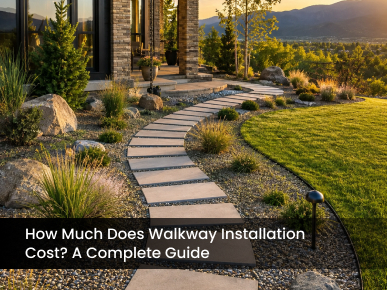
Walkway installation can cost anywhere from $1,000 to several thousand dollars, depending on the walkway’s size, material, design, site preparation, and labor. Concrete is generally a more budget-friendly option, while pavers and natural stone can be more expensive. At Vero Outdoor Living, we consider your property, outdoor space, and design goals to create a walkway that fits both your needs and budget.
There is no single price for every walkway project. In fact, several factors can influence the final walkway installation cost, so it is important to consider the complete project rather than just the material price.
The main factors include:
For example, a short, straight concrete path on level ground will usually be simpler to install than a curved paver walkway that requires extensive preparation.
The material you choose can have a major effect on your overall budget. In addition, each option offers distinct benefits in appearance, durability, maintenance, and customization.
Material | General Cost Level | Main Benefit |
Concrete | $$ | Durable and versatile |
Concrete Pavers | $$$ | Flexible designs and patterns |
Brick | $$$ | Classic appearance |
Natural Stone | $$$$ | Premium, natural look |
These are general cost levels, not fixed Vero Outdoor Living prices. Your actual walkway installation cost will depend on the project requirements.
Yes. Concrete is a popular choice for homeowners looking for a durable and relatively low-maintenance walkway. It can also be customized with different finishes, colors, and decorative options.
A simple concrete walkway may be more affordable than a highly detailed paver or natural stone design. However, stamping, staining, grading, demolition, and other preparation work can increase the final cost.
Pavers can be a great choice if you want more design flexibility. They are available in various colors, shapes, patterns, and textures, making it easier to create a walkway that complements your home’s exterior.
In addition, individual pavers can generally be replaced if they become damaged. Although the initial investment may be higher than basic concrete, the design flexibility and finished appearance can make pavers a worthwhile choice.
A successful walkway starts with proper planning and preparation. Our walkway installation process typically involves several important steps.
We first look at your property and discuss how you want to use the walkway. We consider its location, size, shape, material, and how it will connect with other outdoor areas.
The installation area is prepared by clearing vegetation or existing materials and, when necessary, excavating and grading the ground.
Proper preparation is important because it helps create a stable foundation and supports better drainage.
Once the base is ready, we install the selected material in accordance with the planned design. The installation method will vary depending on whether you choose concrete, pavers, stone, or another surface.
At this stage, careful placement and alignment help create a clean and consistent finish.
Finally, we complete edging, joints, decorative finishes, sealing, and cleanup where required. As a result, the walkway looks finished and works naturally with the surrounding landscape.
A walkway may seem like a simple outdoor feature, but proper installation can make a significant difference in its long-term performance.
Professional walkway installation services can provide:
Most importantly, professional installation focuses on what happens underneath the walkway as well as what you see on the surface.
Poor preparation can eventually contribute to uneven surfaces, shifting, drainage problems, or premature repairs. That’s why having the project properly planned from the beginning can save you time and unnecessary costs later.
A well-designed walkway can improve both the appearance and usability of your outdoor space.
Better accessibility: A dedicated path provides a stable surface between key areas of your property.
Improved curb appeal: A beautiful front walkway can create a more welcoming entrance.
Better outdoor flow: Walkways can connect your home with patios, pools, gardens, driveways, and other areas.
More design options: Different materials, patterns, and finishes let you create a look that suits your home.
Long-term functionality: A professionally installed walkway can handle regular foot traffic while remaining attractive with proper care.
You don’t always need to choose the cheapest material to stay within budget. Instead, focus on getting the right combination of design, durability, and maintenance.
A few practical tips include:
That’s why discussing your goals and budget with an experienced walkway installer can help you make better decisions.
At Vero Outdoor Living, we believe a walkway should be more than a path between two points. It should complement your home and become a natural part of your outdoor living space.
We help homeowners plan and create walkways that connect entrances, patios, gardens, pools, and other outdoor areas. Our approach considers your property’s layout, preferred style, and the materials that best suit the project.
Whether you prefer a clean concrete walkway or a more customized paver design, we can help you explore options that work with your outdoor space.
Most importantly, we focus on creating walkways that are practical, attractive, and tailored to your overall outdoor environment.
Walkway installation can be a valuable addition to your outdoor space, but the final cost depends on the material, size, design, site preparation, and finishing details.
At Vero Outdoor Living, we focus on creating walkways that are practical, attractive, and designed around your property. If you’re considering a new walkway, contact Vero Outdoor Living to discuss your project and explore the right design for your outdoor space.
A simple walkway may take a few days, while larger or more detailed projects can take longer. The timeline depends on the size, material, preparation, design, and weather conditions.
There isn’t one best material for every property. Concrete is practical and versatile, while pavers and natural stone provide more design flexibility. Your budget, style, maintenance preferences, and property should guide your choice.
Many residential walkways are around 3 to 4 feet wide. However, wider paths can be more comfortable in high-traffic areas or where two people need to walk side by side.
Yes. Good drainage helps prevent standing water and can protect the walkway and surrounding landscape from moisture-related problems.
Yes. Walkways can be designed to connect patios, pools, gardens, driveways, entrances, and other outdoor features for a more cohesive layout.